Hiking With A Dog: A Complete Guide For Outdoor Adventures
Hiking is a wonderful way to explore nature and enjoy fresh air. For dog owners, it can be even more special to bring a loyal friend along. Dogs love the outdoors, and hiking together can strengthen your bond, provide great exercise, and create lasting memories.
But hiking with a dog is not as simple as grabbing a leash and heading out. You need to plan, prepare, and understand your dog’s unique needs on the trail. This guide covers everything you should know for safe, fun, and responsible hiking with your dog.
Preparing Your Dog For Hiking
Not every dog is ready for the trail right away. Just like humans, dogs need training and the right equipment. Preparation is key to a safe and enjoyable experience.
Check Your Dog’s Health
Before hiking, visit your vet for a health check. Make sure your dog is up to date on vaccinations, flea and tick treatments, and is free from injuries. Young puppies, senior dogs, or those with joint problems may not be fit for long hikes. Dogs with short noses (like pugs or bulldogs) can struggle with heat and long distances.
Build Up Fitness
If your dog is new to hiking, start with short walks. Slowly increase the distance and difficulty. This helps build endurance and toughens their paw pads. Never force your dog to walk too far, especially in the beginning.
Essential Training
A well-behaved dog is critical on the trail. Teach your dog basic commands such as come, stay, leave it, and heel. Practice recall in areas with distractions. A reliable recall can save your dog’s life if they see a wild animal or get off-leash.
What To Pack For Your Dog
Packing for your dog is as important as packing for yourself. Bring only what’s truly needed, but don’t skip the basics.
| Item | Why It’s Important |
|---|---|
| Leash & Harness | Control and safety on the trail |
| Collapsible Water Bowl | Easy hydration for your dog |
| Dog Food & Treats | Maintains energy during the hike |
| Paw Protection (Boots or Balm) | Prevents injuries from rough terrain |
| Waste Bags | Keeps trails clean and safe |
| First Aid Kit | For minor injuries or emergencies |
| ID Tag & Microchip | Helps in case your dog gets lost |
Bring enough water for both you and your dog. Dogs can get dehydrated quickly, especially in warm weather. Avoid letting your dog drink from streams or ponds, as the water may contain harmful bacteria.
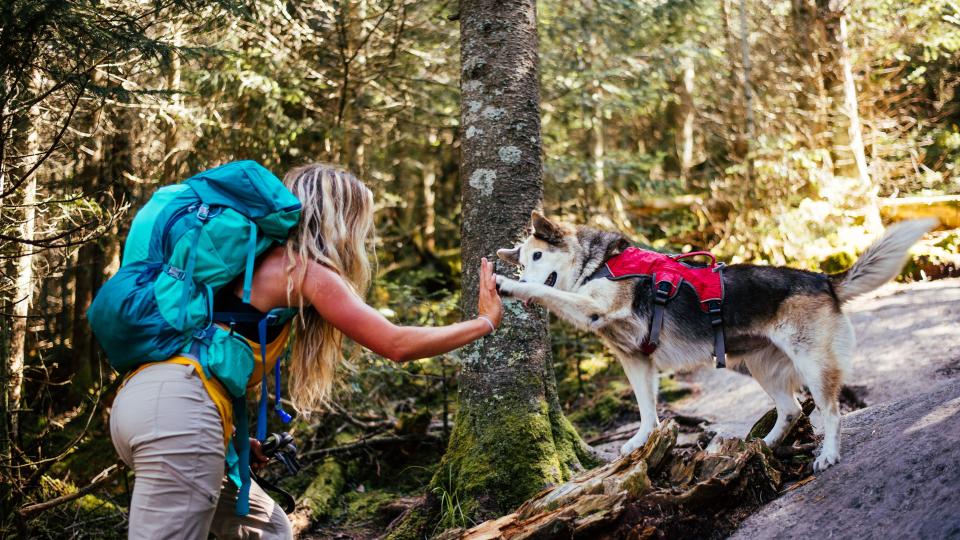
Credit: visitadirondacks.com
Choosing The Right Trail
Not every trail welcomes dogs. Some are too challenging, while others may have wildlife or dangers.
Dog-friendly Trails
Research trails before you go. Look for dog-friendly paths and follow local rules. Some areas require dogs to be leashed at all times. National parks often have strict regulations. State parks and local trails are usually more open to dogs.
Trail Difficulty
Choose a trail that matches your dog’s ability. Consider the length, elevation, terrain, and weather conditions. For beginners, pick easy or moderate trails with shade and water access.
Weather And Timing
Dogs are sensitive to heat and cold. Hike early in the morning or late afternoon to avoid hot sun. In summer, avoid rocky or sandy trails that can burn your dog’s paws.
On The Trail: Safety And Etiquette
How you act on the trail affects everyone. Respect nature, other hikers, and wildlife.
Leash Laws And Control
Always keep your dog under control. Use a sturdy leash, especially in crowded or wildlife-rich areas. Even if off-leash is allowed, only let your dog run free if their recall is perfect.
Picking Up After Your Dog
Leaving dog waste on the trail is harmful to the environment and other hikers. Always pick up after your dog and pack out waste bags. Don’t leave bags on the side of the trail.
Wildlife And Plants
Dogs are curious and may chase animals or eat plants. Watch for snakes, poisonous plants, and insects. Keep your dog away from wildlife to avoid accidents or disease.
Rest And Hydration
Take breaks often. Offer water every 30-45 minutes, especially on hot days. Watch for signs of overheating, like heavy panting, drooling, or weakness. If your dog seems tired, rest in the shade.
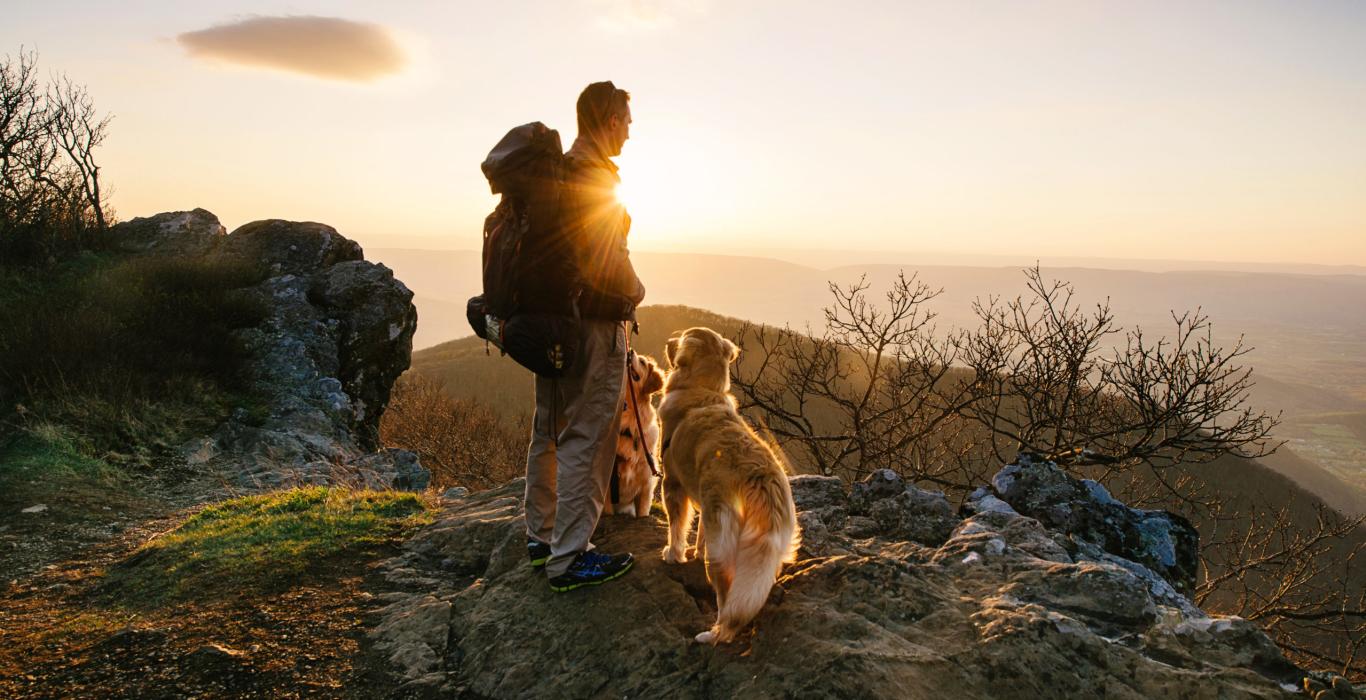
Credit: www.virginia.org
Comparing Hiking With And Without A Dog
Some wonder how hiking changes when you bring your dog. Here’s a quick comparison:
| Hiking With a Dog | Hiking Without a Dog |
|---|---|
| Stronger sense of companionship | More personal solitude |
| More frequent breaks for dog’s needs | Continuous hiking possible |
| Need to carry extra gear for dog | Lighter backpack |
| Must follow more trail rules | Fewer restrictions |
| Added safety from wildlife encounters | No early warning from animals |
Hiking with a dog brings more responsibility, but also more joy and security.
Special Tips For A Great Hiking Experience
- Start with short hikes to see how your dog reacts.
- Use a harness instead of a collar for better control and comfort.
- Bring a doggy backpack for medium and large breeds. They can carry their own water and snacks, but don’t overload (no more than 25% of their body weight).
- Check paws regularly for cuts, thorns, or irritation.
- Respect leash rules even if your dog is well-trained.
- Plan for emergencies by knowing the nearest vet clinic to your trail.
- Practice leave no trace by packing out all waste and staying on marked trails.
Two insights many beginners miss: Dogs can overheat much faster than people, especially on humid or sunny days. Also, some dogs may become anxious in busy or noisy areas, so always observe your dog’s mood and be ready to adjust your plan.
After The Hike: Recovery And Care
Once you finish your hike, inspect your dog carefully. Check for ticks, burrs, or injuries. Clean their paws and give them fresh water. Dogs may be tired, so let them rest and avoid too much activity for the rest of the day.
If you notice limping, vomiting, or unusual behavior, contact your vet.
Frequently Asked Questions
How Do I Know If My Dog Is Ready For Hiking?
Your dog should be healthy, fit, and able to follow basic commands. Start with short walks and build up slowly. If your dog enjoys walking, has no breathing or joint problems, and listens well, they are likely ready for easy hikes.
Can Small Dogs Go Hiking?
Yes, small dogs can hike, but choose shorter, less rough trails. Carry them if they get tired. Watch for hazards like rocks or deep mud that are hard for small dogs to cross.
What Should I Do If My Dog Gets Injured On The Trail?
Carry a small first aid kit with items for cleaning wounds and stopping bleeding. If the injury is serious, carry your dog back or seek help. Know the nearest emergency vet before you start your hike.
How Much Water Does My Dog Need During A Hike?
Dogs need about 50-100 ml of water per kg of body weight per day, but this can double during exercise. Offer water every 30–45 minutes, and more often if it’s hot or your dog is panting heavily.
Where Can I Find Dog-friendly Hiking Trails?
Check websites like AllTrails, local park services, or the American Hiking Society for lists of dog-friendly trails and their rules.
Hiking with a dog is one of the best ways to enjoy nature and keep both you and your pet healthy. With the right preparation, training, and respect for the trail, you’ll both have a safe and memorable adventure. Always put your dog’s safety first, and you’ll become a great hiking team.

Credit: www.rei.com